Israelis Prioritize Security Over Global Image Ahead of Vote
Experts say voters view diplomatic challenges as secondary to the ongoing war and the threat posed by Hamas, despite record-low international approval ratings.
By Lucia Navarro ·
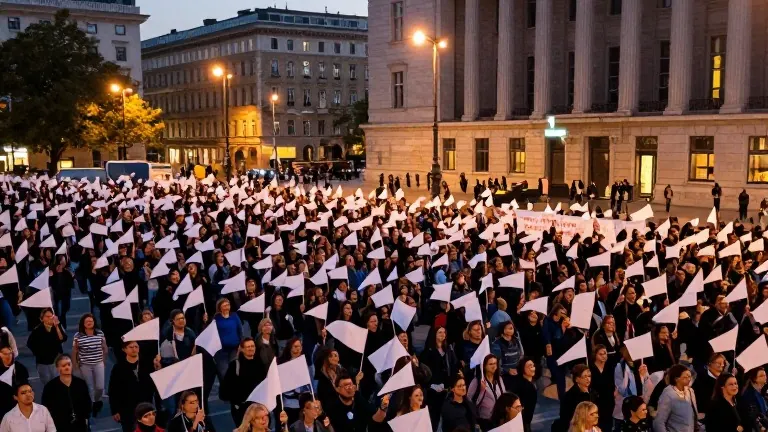
Israelis have focused on security as the primary concern ahead of the Oct. 27 election, according to political analysts. This focus persists despite a sharp decline in Israel’s international standing and rising reports of antisemitism abroad. Three experts told the Jewish Telegraphic Agency that voters see diplomatic image as a secondary issue compared to the immediate realities of war.
A Pew poll conducted between February and May found that a median of 67% of adults across 36 countries held an unfavorable view of Israel. This statistic coincides with incidents of harassment against Israeli tourists in Europe, Asia, and the Americas. In July, a group in Montenegro was confronted by locals who questioned their presence. In Greece, a restaurant refused service to an Israeli woman, and in California, a hotel staff member asked a couple if they were baby killers.
Yaakov Katz, a senior fellow at the Jewish People Policy Institute, stated that many Israelis accept Prime Minister Benjamin Netanyahu’s argument that the world is largely against Israel. Katz noted that citizens often view the rise in antisemitism as a trend that would continue regardless of Israel’s specific actions. He observed that the average Israeli does not fully grasp that declining support, particularly in the United States, could have existential consequences for the country.
Ofir Dayan, a senior fellow at the Institute for National Security Studies at Tel Aviv University, said Israelis are aware of foreign hostility but consider it less pressing than security. Dayan described Israeli voters as one-issue voters, with the issue in this election being security. She explained that the country is not yet remote enough from the Oct. 7, 2023, Hamas-led terror attack for voters to shift their ballots based on diplomatic concerns.
Peter Lerner, a former Israel Defense Forces spokesman for the international press, identified two main factors that outrank Israel’s international standing. He cited the choice of whether to keep Netanyahu in power and the divide between the left and the right. Lerner added that when candidates discuss international relations, it is secondary to the question of who is best suited to deal with surrounding threats.
Few parties have proposed detailed plans to improve public diplomacy. The B’Yachad Party, led by Naftali Bennett and Yair Lapid, aims to elevate the role of Diaspora Jewry by allowing a non-voting observer in the Knesset. Amcha Yisrael, a new right-wing party, includes two prominent public diplomacy activists on its candidate list. Journalist Eylon Levy noted that for most candidates, public diplomacy is not a goal in itself but a means to achieve national interests.
Levy suggested that a new government elected on Oct. 27 would likely receive a grace period from allies. He argued that while a moderate government would not magically boost Israel’s standing, it would buy the country some goodwill among nations that theoretically support it.
Source: The Jerusalem Post